German vocabulary games: learn words while you play
Read a German word, choose its English meaning and turn your answer into an action. In Fluera Tower, correct translations earn gold for your defenses. In Fluera Jump, you land on the platform with the right translation. In Fluera Run, you choose your answer as you move through an obstacle course. All three games use vocabulary from Fluera’s German course and work in your browser on a phone or computer. You can start without an account.
Choose your German game
{# Crawlable fallback for the same cards mounted by PublicPracticeCards.jsx. Decorative SVG artwork is added by the shared client card component. #}A few German words to get started
These examples show the direction of practice: German vocabulary with English translations. They are a sample, rather than a fixed deck for every round. The course also includes words for food, family, home, travel, work, study, opinions and everyday conversations. Choose familiar vocabulary while you learn the controls, then return to words that need more attention.
With an account, game practice uses your vocabulary progress. Words due for review, words you are learning and new words can appear in the same session. Your answers contribute to the same vocabulary you use in lessons and other practice. You can move from a game to an example sentence without maintaining a separate collection of German words.
Fluera Tower: translate words to build your defense
Enemies follow a path toward your base. You place towers beside the route, improve your defenses and answer vocabulary questions to earn gold. Each question offers two translations. Read the German prompt, compare the English meanings and choose the answer before returning to the battle. A correct translation supplies a resource; where you spend that resource is your strategy decision.
Tower suits players who enjoy a campaign and a sequence of separate battles. A useful first goal is to understand how answering, building and upgrading work together. If enemies get through, consider both the words and the defense: uncertain translations may have reduced your gold, while a weak position may have wasted it. Explore Fluera Tower.
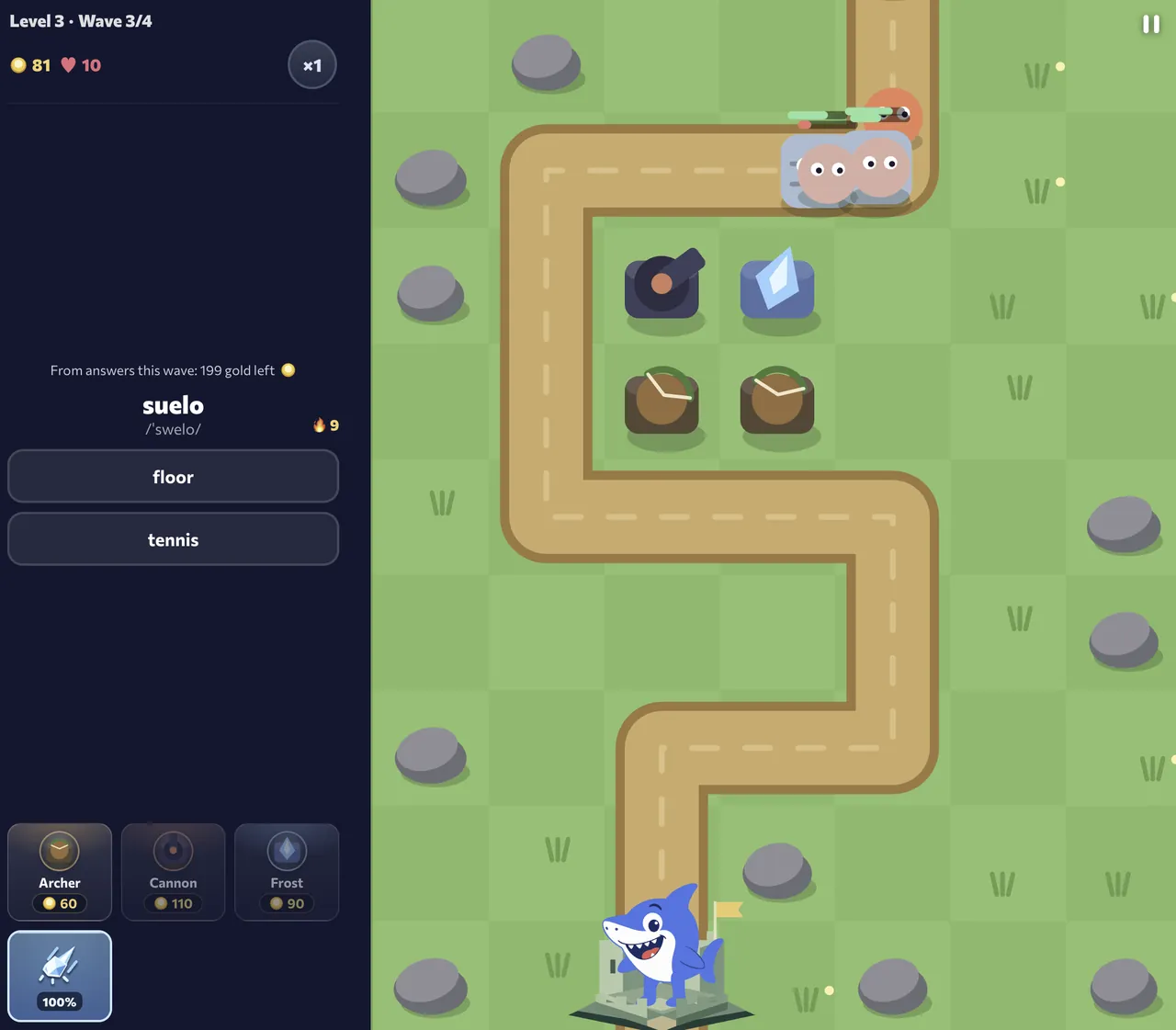
The screenshots show the English interface with Spanish vocabulary. Open a game from this page to select German with English translations.
Fluera Jump: land on the German word’s meaning
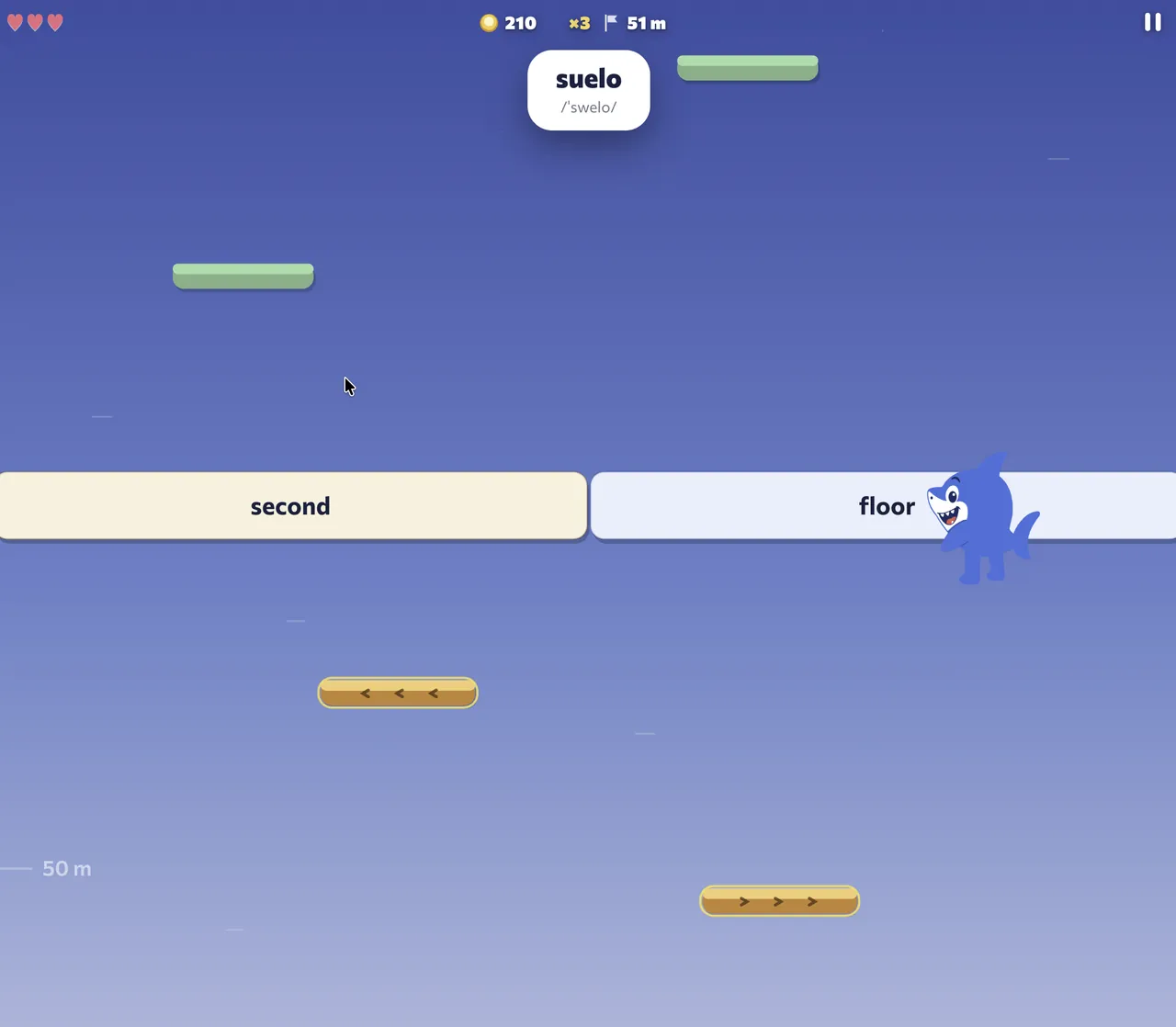
Fluera jumps automatically while you steer her across the screen. At a question row, a German word appears with two translation platforms. Your landing selects the answer. This connects reading to a simple choice of side, but the timing still matters: knowing the meaning and reaching the right board are separate parts of the task.
Begin with a short climb to learn the movement. Read the whole word before choosing a direction, especially when two German spellings look similar. If a jump goes wrong, check whether the problem was the translation or the landing. The next attempt is easier to plan when you know which part caused trouble. Explore Fluera Jump.
Fluera Run: choose a translation on the move
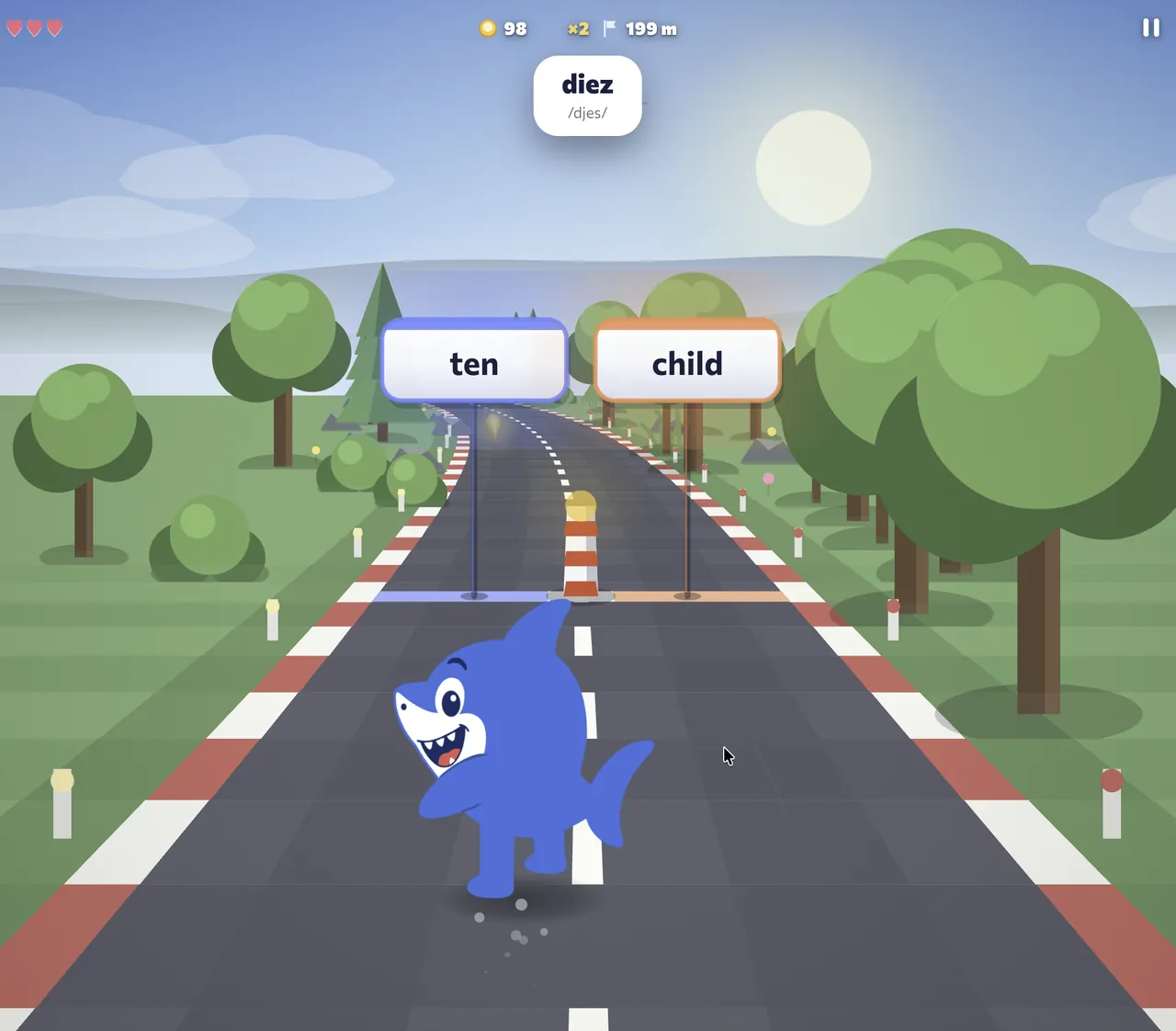
In Run, the track keeps moving and answer choices appear ahead. A lane change, jump or slide selects a translation, depending on the question. Read the German word and move toward the English meaning that matches it. Assist mode handles jumps and slides so vocabulary questions remain left-or-right choices. Follow the controls shown in the game for your device.
Run is a good fit when you enjoy an obstacle course and repeated attempts. Distance gives you a game goal, while the vocabulary questions give you something specific to review afterward. A longer run can include more words, but it is still useful to stop after a short attempt and study one translation that made you hesitate. Explore Fluera Run.
Read German spelling as part of the word
German nouns normally begin with a capital letter, so forms such as Buch and Haus keep their capitals in vocabulary practice. Read the authored spelling instead of treating a capital as a clue that an option must be correct. The same habit helps when a name or the first word of a sentence starts with a capital for a different reason.
Pay attention to umlauts and ß as well. When you later encounter forms such as Buch and Bücher, compare the whole word. A short game question focuses on the intended meaning; an example sentence is a better place to examine how a changed ending or vowel works. Open the word after playing when the spelling keeps causing hesitation.
Keep the article and the example together
Recognizing the English translation of a German noun is a useful step. To use that noun in a sentence, also study its article and the forms around it. For example, das Buch connects the word for “book” to its article. An English gloss by itself does not tell you which German article to use or how the phrase changes in another sentence.
After a round, choose one noun that needs attention. Read a course example, notice the article in that sentence and listen to the available recording. You can keep this follow-up small. One carefully understood phrase is enough to give the next encounter with that noun more context, without interrupting every game question for a grammar explanation.
Read compound words and verb forms completely
A long German word can become easier to recognize when you notice familiar parts. Those parts are clues to check against the meaning of the whole word. Do not choose an English answer solely because you recognized the first few letters. Read to the end, compare the options and use an example afterward if the complete meaning remains unclear.
Verbs deserve the same attention. A dictionary form and the form used in a sentence can look different, and a separable prefix can appear elsewhere in the sentence. Games provide translation practice; the German course provides space to examine the complete construction. When a verb surprises you, return to its example and connect the words before trying to answer faster.
Play in a browser or in the Fluera app
The games run in a browser on a computer, phone or tablet. You can also play in the Fluera app for iPhone and Android. Choose the controls that suit your device and spend your first attempt learning how an answer is registered. Switching from a keyboard to a touchscreen can change a score even when the vocabulary is familiar.


Starting as a guest lets you try the games before creating an account. Guest access has usage limits. Sign in when you want practice to follow your personal vocabulary and save progress across devices. A game result combines vocabulary choices with movement or strategy, so use it alongside what you notice about the words themselves.
Play with words from a German list
For a particular topic, open a German word list and launch a game from that list. It gives the session a vocabulary set you have chosen: useful for returning to travel words, a reading topic or a collection you are studying. Starting from the cards on this page selects the German course; the five sample words above do not determine every question in that session.
Study the list’s words and available examples before playing if most of the vocabulary is new. Then use the game to practice recognizing meanings with fewer pauses. If a translation still feels uncertain, return to the list and read its context. A short translation can express the meaning needed for one question while another sentence calls for different English wording.
Continue with listening, sentences and review
Choosing a written translation practices recognition. To work on sound, listen to the word and its example recording outside the round. To work on sentence structure, open the German course and practice the complete sentence. You can repeat an example aloud and compare it with the audio without coordinating a jump or a tower placement at the same time.
With an account, use Review when words are due and Mistakes when you want to return to incorrect answers. Choose one manageable next step: hear a word again, understand a phrase or revisit a confusing translation. There is no need to finish all three games before continuing. The most useful result of a round may be knowing exactly which German word you want to study next.
Frequently asked questions
Are these German vocabulary games free?
Can I start if I know only a few German words?
Which language are the German translations in?
Can I practice a specific German word list in a game?
Do the games explain German grammar and pronunciation?
Do I need to install the app?
Give your next German word some context
Learn German · Word lists · All vocabulary games · Review words · Work on mistakes